

Over the past four months, the Decision Science team at =mc consulting has been running a live behavioural experiment inside one of Edinburgh’s most characterful cultural spaces — the Writers’ Museum. Our goal was to find out if we could influence visitor behaviour to this free-to-visit museum, specifically encouraging international visitors/tourists to make donations.
Our question was simple:
What happens when you systematically apply behavioural science to visitor fundraising in a small museum?
The answer surprised even us.
But first, context.
Three writers. One decision environment.
The Writers’ Museum celebrates three giants of Scottish literature:
- Robert Burns
- Sir Walter Scott
- Robert Louis Stevenson
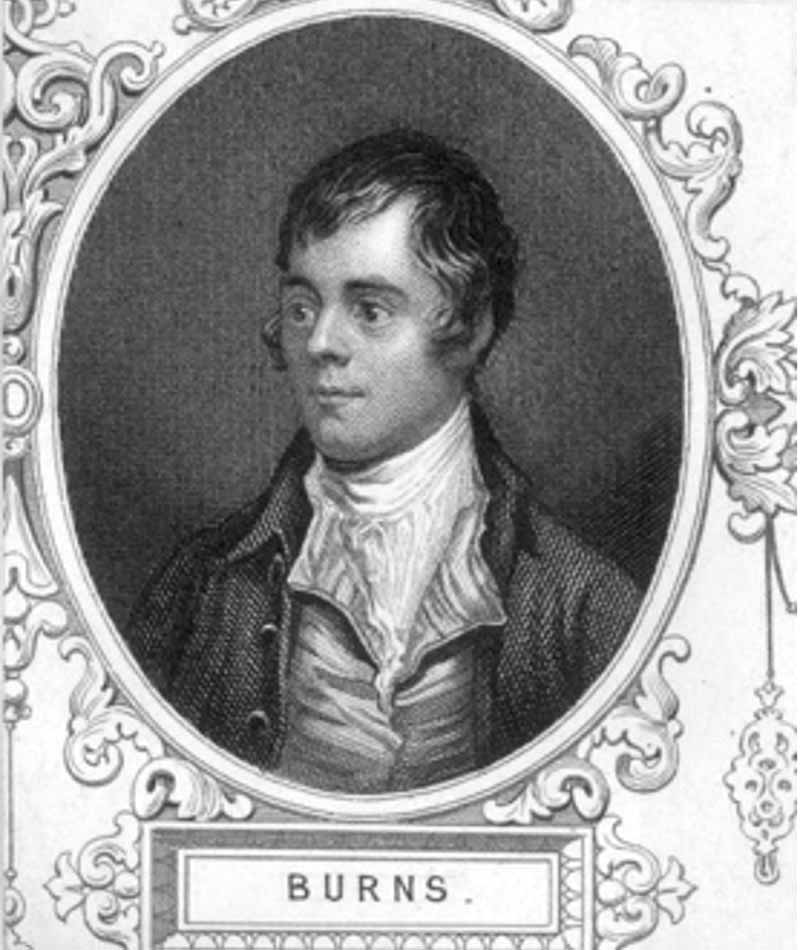
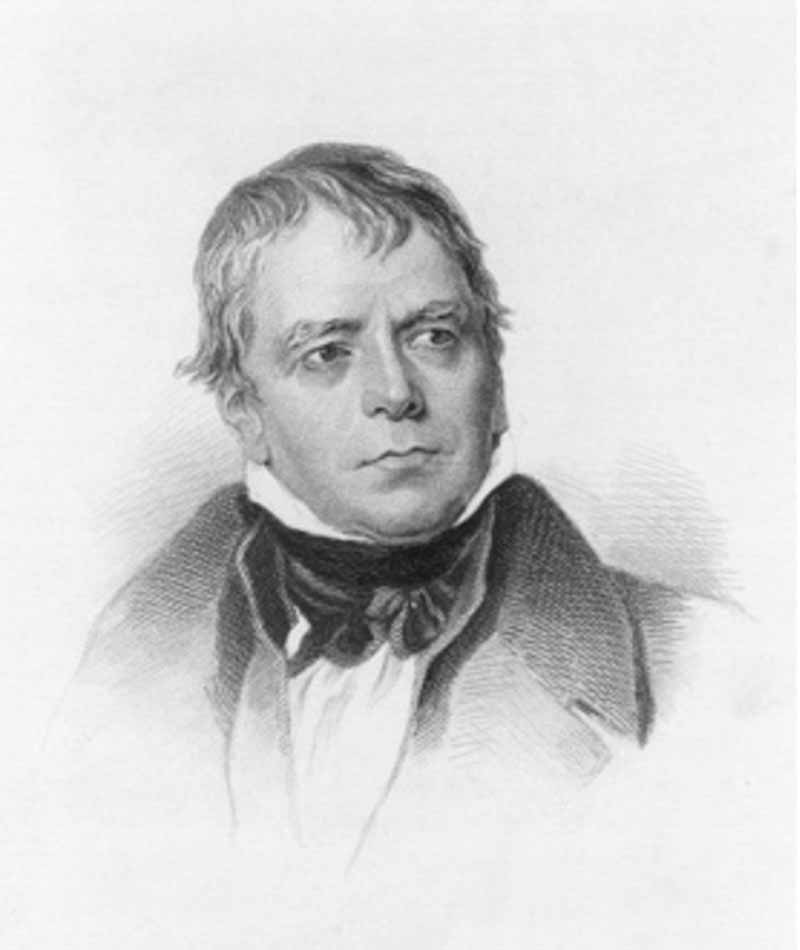
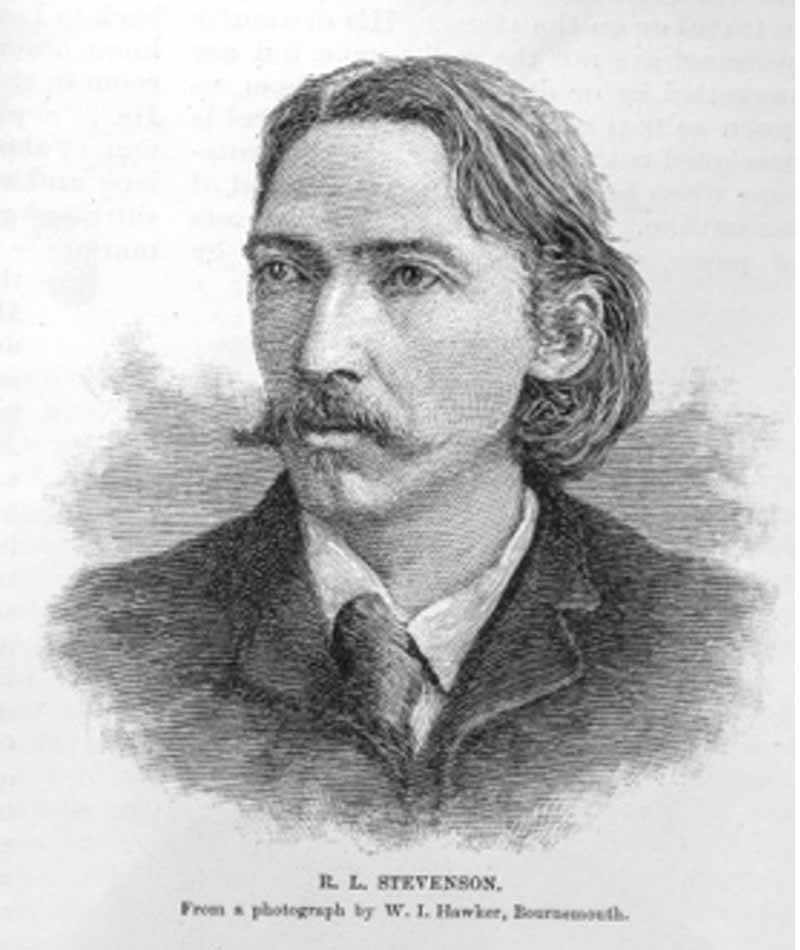
Each writer carries cultural gravitas. But gravitas is not the same as salience. So before redesigning the donation experience, we asked a basic behavioural question:
Who is actually visiting – and who are they here for?
Step One: Test recognition
We conducted a simple on-site survey:
- Where have you travelled from?
- Is there one of the three writers did you specifically come to see?
- Which had you heard of before arriving?
The data showed a strong proportion of visitors from the United States.
And the most widely recognised author? Robert Louis Stevenson.
Not surprisingly, his global reputation – fuelled by translations and adaptations of Treasure Island and Dr Jekyll and Mr Hyde – makes him cognitively “available” to international audiences.
Behavioural principle:
The availability heuristic. We are drawn to what we recognise.
Recognition creates readiness. Readiness creates opportunity.
The starting point: Benchmark the existing proposition
The existing donation point emphasised the museum’s “wonderfully different” proposition – its uniqueness, intimacy, and civic character.
It was charming.
But from a decision science perspective, it was abstract.
Visitors were invited to support something they liked – but without structured cues about:
- Why now
- How much
- What difference
- Or what it said about them
So we began testing.
Four behavioural interventions
Across four months, we introduced four carefully designed interventions – each grounded in specific behavioural heuristics.
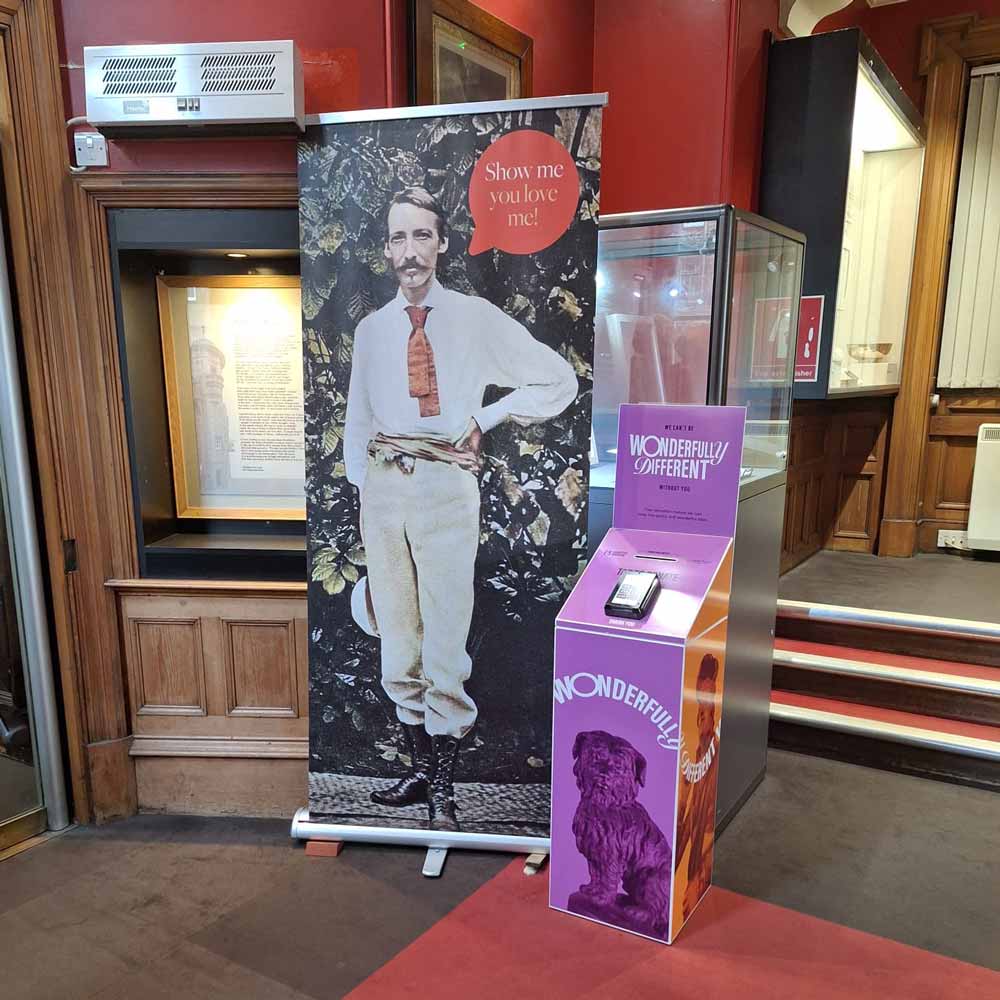
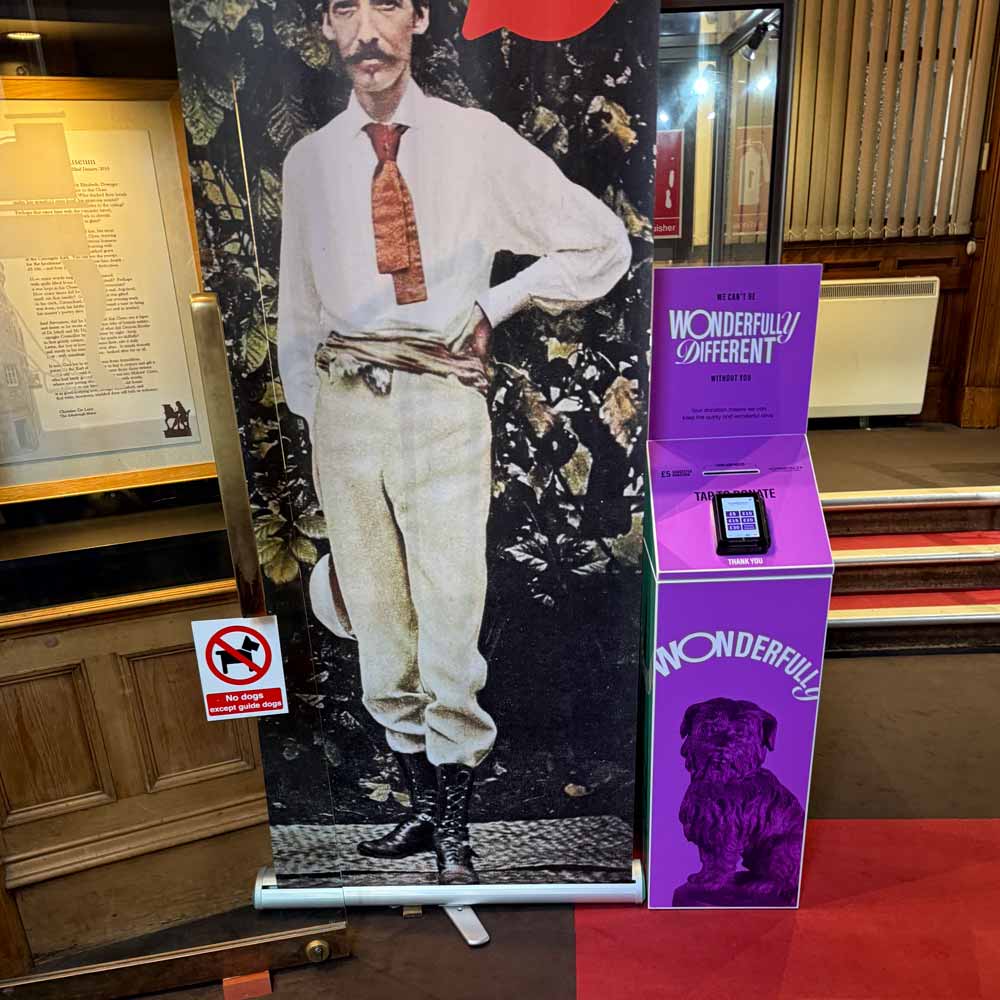
1. The RLS selfie banner
We installed a pop-up banner featuring striking Robert Louis Stevenson artwork, explicitly encouraging visitors to take selfies and “show their love for RLS.”
Heuristics applied:
- Attention & salience
- Public commitment
- Social signalling
When people make their identity visible, behaviour often follows.
If you’ve publicly shown your affection for Stevenson – are you more inclined to support the museum that preserves him?
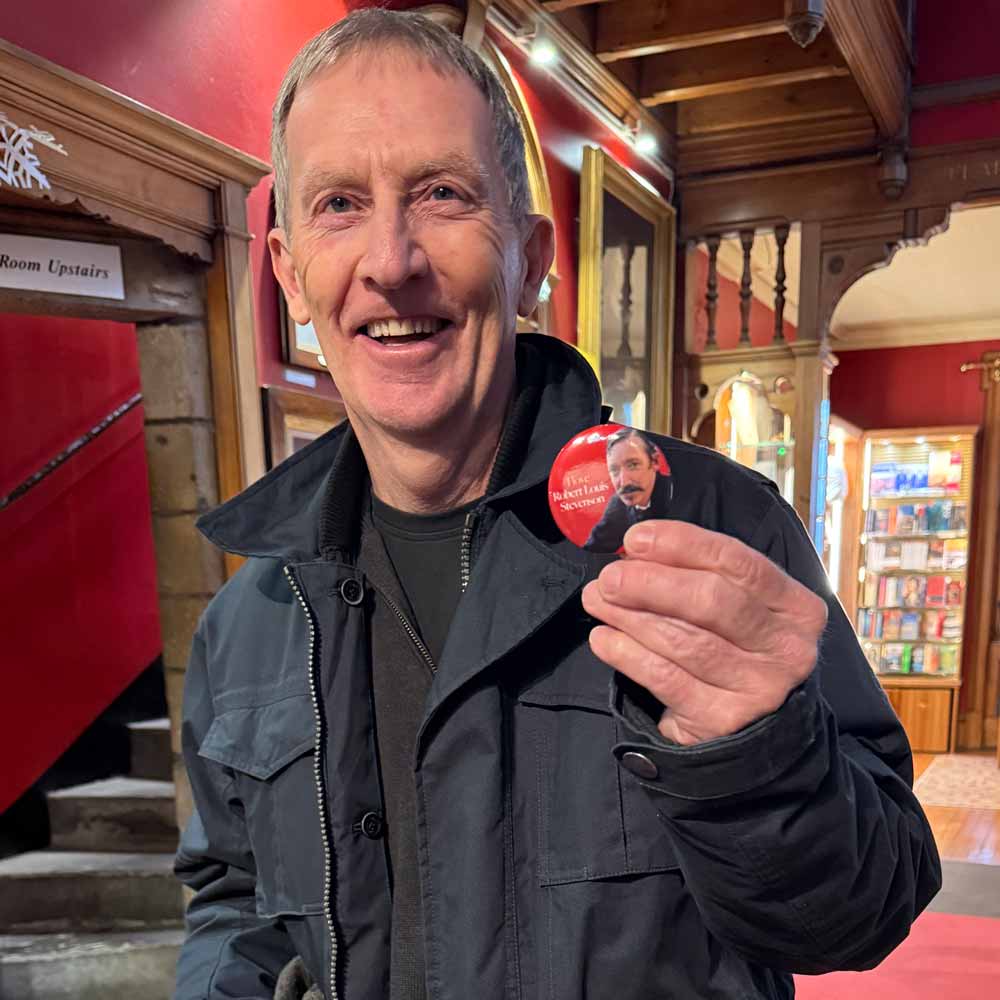
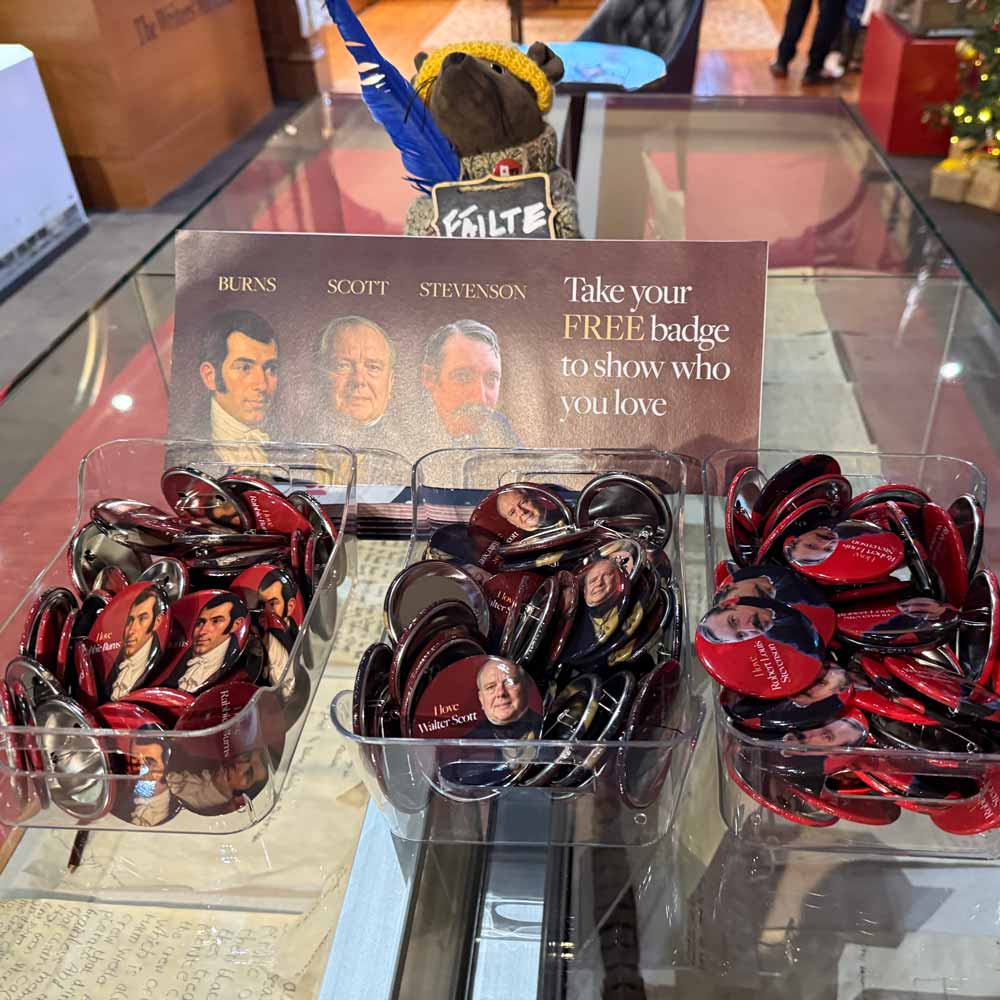
2. Free writer badges at entry
Visitors were offered free badges representing Burns, Scott, or Stevenson – encouraging them to declare their preference.
Heuristics applied:
- Reciprocity (a gift before the ask)
- FOMO (limited, collectible feel)
- Identity priming
Receiving something first subtly increases willingness to give back.
Wearing a badge turns literary appreciation into a public identity signal.
And identity drives behaviour.
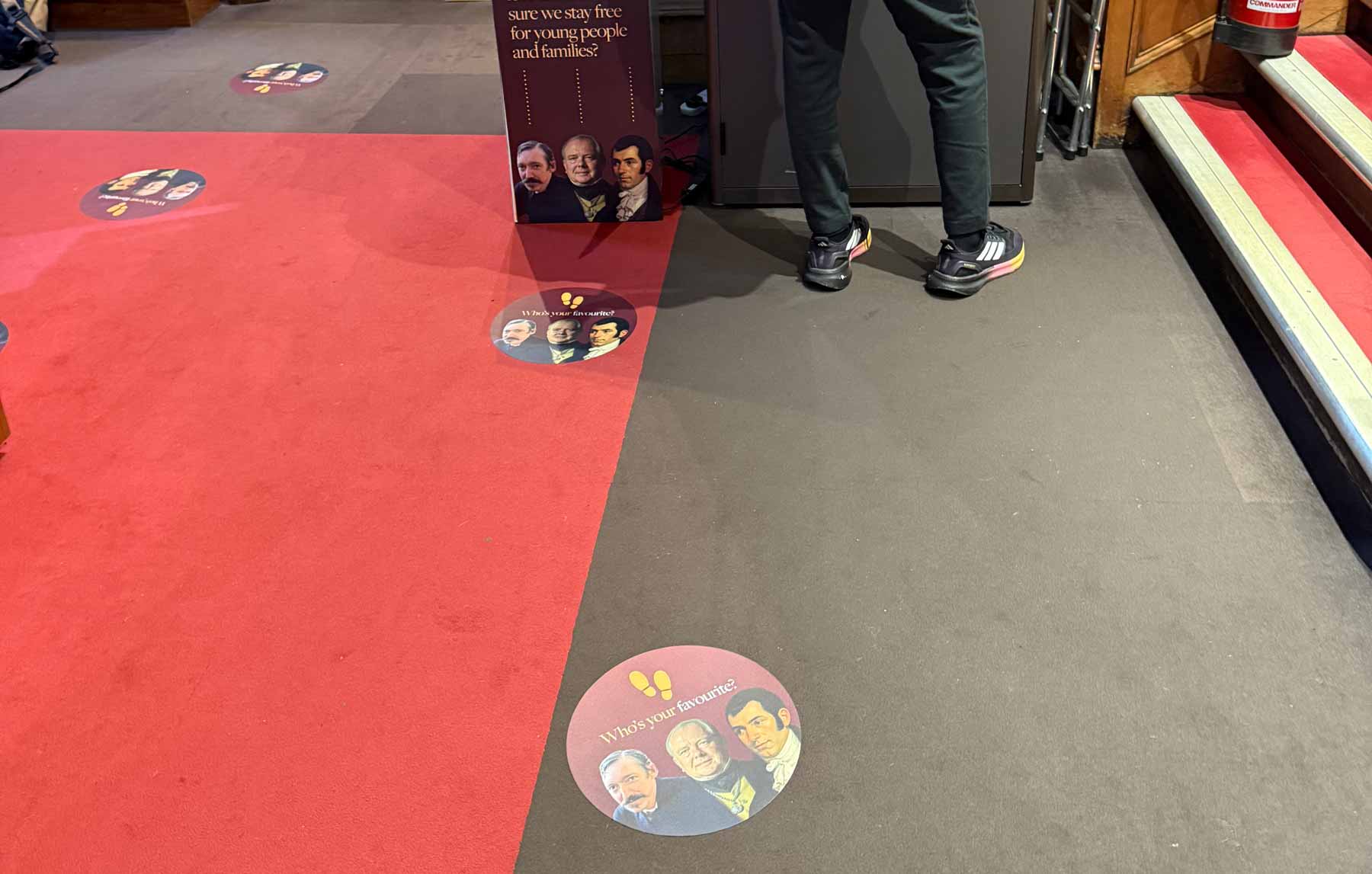
3. Footprint floor decals
We placed subtle footprint decals on the floor, gently guiding visitors toward the donation point.
No instruction.
No command.
Just a physical pathway.
Heuristics applied:
- Effort reduction
- Physical cueing
Humans often follow environmental signals automatically.
If the “path” leads somewhere, many people follow it.
Behaviour is embodied.
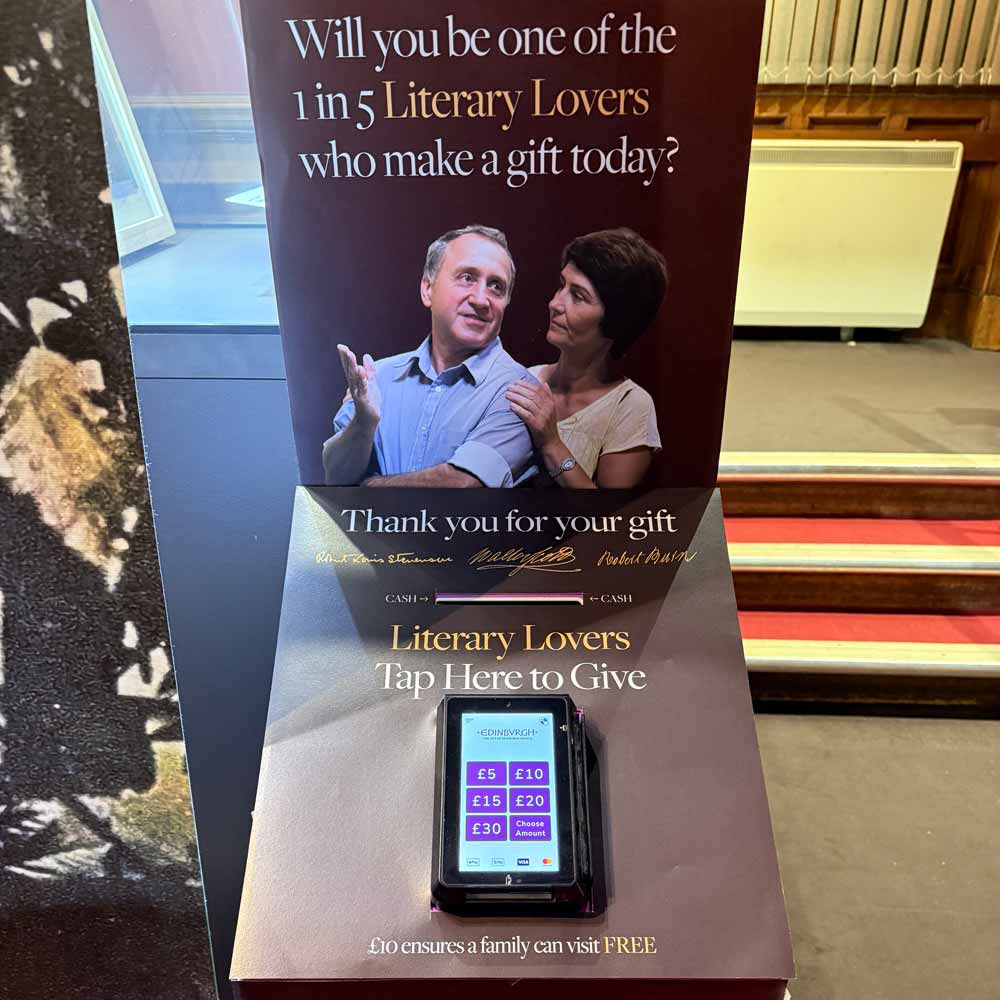
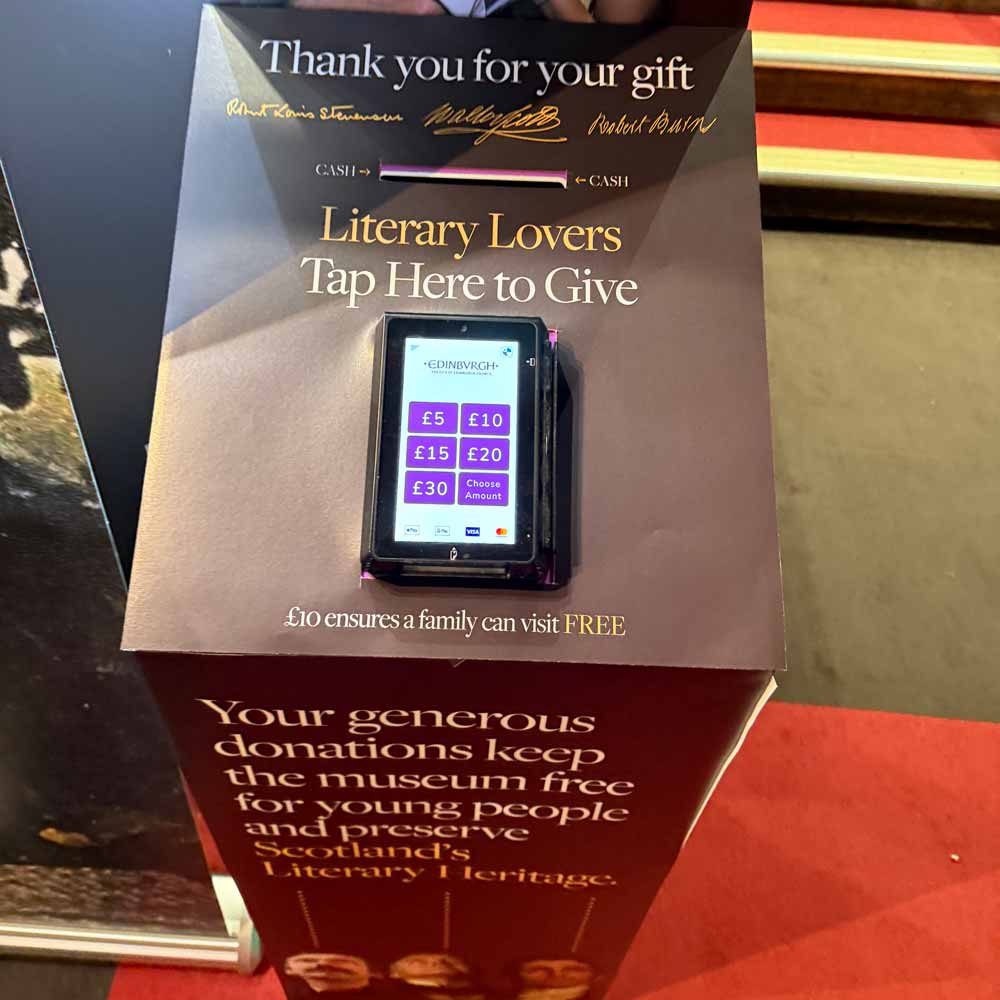
4. A new proposition: “Literary Lovers”
Finally, we redesigned the donation messaging itself – putting a new “skin” on the ask. Instead of abstract support, visitors were invited to show they were: “Literary Lovers.”
Heuristics applied:
- Identity-based motivation
- Social belonging
- The Sapir–Whorf hypothesis (language shapes perception)
By changing the language, we shifted the meaning of the act.
You weren’t “donating.” You were expressing who you are. And identity-consistent actions feel natural.
Notice that we also uses AI-altered images of the three authors to direct attention to the donation point.
So which worked best?
Each intervention applied one or more behavioural principles:
Intervention
Selfie Banner
Free Badges
Footprint Path
Literary Lovers Reframe
Behavioural Drivers
Attention, salience, public signalling
Reciprocity, FOMO, identity
Physical default, ease, automaticity
Identity, language framing
Guess which had the greatest impact? The answer isn’t necessarily the most theatrical. Nor the most visible. Behavioural science often rewards the intervention that most directly reduces friction and aligns identity with action.
But the real lesson isn’t just which won. (See below if you want to know what won.)
It’s this: Visitor fundraising is a decision environment. And decision environments can be designed.
What this means for cultural organisations
Museums curate interpretation meticulously. But donation points are often accidental. Yet the donation moment is not administrative. It is psychological.
- Recognition matters.
- Salience matters.
- Physical cues matter.
- Identity matters.
- Language matters.
Small changes compound.
And ethical nudges, thoughtfully applied, can significantly increase voluntary giving – without pressure, guilt, or manipulation.
The bigger opportunity
As public funding tightens, cultural institutions cannot simply “ask harder.” They must design smarter.
Behavioural science offers:
- Structured experimentation
- Measurable impact
- Ethical influence
- Better visitor experience
And perhaps most importantly: a shift from guessing to testing.
 If you’d like to know which intervention had the greatest impact — and by how much — contact:
Bernard Ross | bernardross@mc.consulting
Because when we understand how people really decide, we raise more — ethically.


